
Imagine a world where artificial intelligence doesn’t just answer your questions but actively shapes your digital life, running on nothing more than an old laptop in your garage. This isn’t science fiction; it’s the reality of Clawdbot, an innovative tool blending Anthropic’s Claude AI with autonomous capabilities. As we delve into this technology, you’ll discover how it shatters the limitations of traditional chat interfaces, ushering in an era of true AI sovereignty and automation.
The illusion of the “data center” at home
In the realm of emerging technologies, there’s a pervasive myth that achieving true digital sovereignty requires an elaborate setup, think stacks of high-end servers or custom-built data centers humming in your basement. You’ve likely seen those viral photos of Mac Minis piled high, resembling a makeshift supercomputer, often shared by tech enthusiasts as the pinnacle of personal computing power. It’s all part of the “tech-showoff” culture, where the spectacle overshadows practicality. But let’s dismantle this illusion: real sovereignty in AI doesn’t demand exorbitant hardware investments or complex infrastructure.
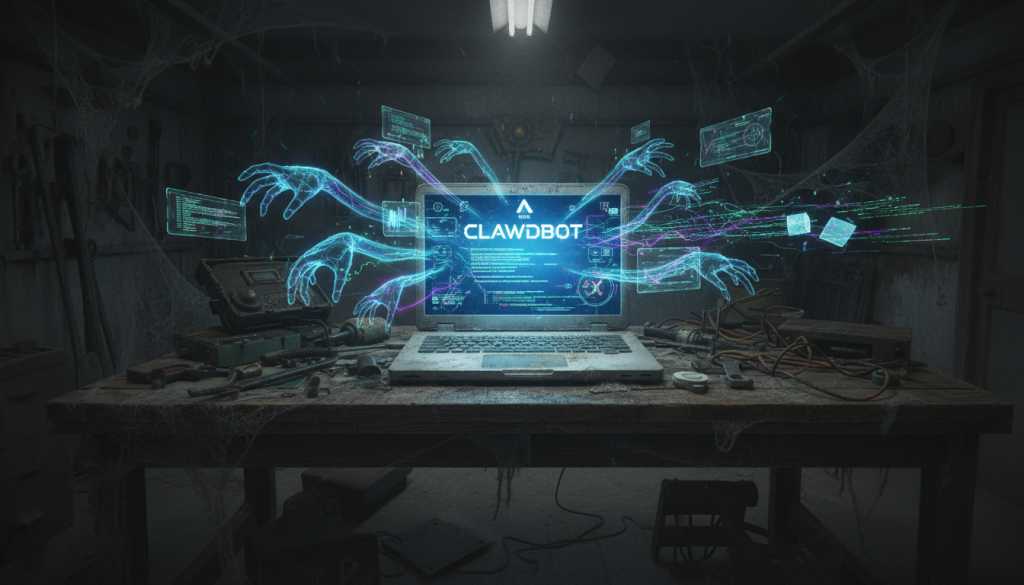
Enter Clawdbot, a system that exemplifies how accessible true autonomy can be. This tool, built around Anthropic’s Claude AI, operates efficiently on a server costing as little as $5 per month or even a dusty old laptop gathering cobwebs in your home office. The key takeaway here is that sovereignty isn’t about flashy equipment; it’s about digital literacy and smart resource allocation. By leveraging open-source code and cloud efficiencies, Clawdbot democratizes access to advanced AI agents, making it possible for anyone with basic technical know-how to run a powerful, autonomous system without breaking the bank.
Debunking the hardware hype
The allure of home data centers often stems from a desire for control—keeping your data private and operations independent from big tech giants. However, this vision frequently leads to unnecessary expenses and complexity. For instance, enthusiasts might invest in multiple high-performance machines, complete with cooling systems and redundant power supplies, only to realize that most tasks don’t require such overkill. Clawdbot flips this narrative by running on minimal hardware, such as a repurposed MacBook from over a decade ago, as highlighted in discussions around zero-human companies where AI orchestrates everything on humble setups.
This approach aligns with broader trends in sovereign tech, where the focus shifts from hardware to software ingenuity. By using efficient scripting and AI orchestration, Clawdbot minimizes computational demands, ensuring that even low-end devices can handle sophisticated tasks. It’s a reminder that true power lies in the code, not the casing.
The role of digital literacy
To harness Clawdbot’s potential, users need a foundational understanding of digital tools—things like basic command-line operations or API integrations. This “literacy” is the real cost of entry, far outweighing any monetary investment in hardware. Educational resources abound, from online tutorials to community forums, empowering individuals to set up their own AI agents without relying on proprietary ecosystems.
In essence, Clawdbot embodies the message that sovereignty is achievable and affordable. It challenges the notion that advanced AI is reserved for corporations with massive data centers, proving that a simple, cost-effective setup can deliver profound results.
Why Clawdbot changes the game (the method)
Traditional AI interfaces, like those in ChatGPT or the web version of Claude, are essentially glorified chat windows—limited to text-based interactions with short-term memory that fades like a goldfish’s attention span. They respond to queries but lack the ability to take real-world actions or retain context over extended periods. Clawdbot revolutionizes this paradigm by transforming AI into a persistent, action-oriented entity integrated into everyday tools like WhatsApp or Telegram.
At its core, Clawdbot “lives” in your messaging apps, maintaining a long-term memory that recalls conversations from weeks ago. This persistence allows for more meaningful interactions, where the AI builds on previous inputs rather than starting from scratch each time. But the true game-changer is its “gateway” feature—a bridge that enables the AI to interact with external systems, execute commands, and automate tasks beyond mere conversation.
From passive chat to active agency
Unlike static chatboxes, Clawdbot employs autonomous AI agents powered by Anthropic’s technology. These agents can access files, run scripts, and even interface with other services through secure APIs. For example, if you ask it to organize your digital workspace, it doesn’t just suggest steps; it performs them, sorting files and generating reports in real-time.
This method draws from advancements in AI orchestration, where models like Claude are extended with tools for self-improvement and task execution. It’s a shift from consultative AI to operational AI, making Clawdbot a versatile companion for both personal and professional use.
Integration with everyday tools
By embedding in platforms like Telegram, Clawdbot ensures seamless accessibility. Users can issue commands via voice or text, with the AI responding contextually. This integration fosters a natural workflow, where AI becomes an extension of your digital self, handling routine tasks while you focus on higher-level decisions.
Overall, Clawdbot’s method signals the end of the chatbox era, replacing isolated interactions with a holistic, memory-rich ecosystem that empowers users in unprecedented ways.

The “dystopian multiplier” reversed: AI at your service
In discussions of technology like navigation apps, we’ve seen how data collection can create a dystopian multiplier—surveillance that erodes privacy under the guise of convenience. Clawdbot inverts this dynamic, using your data not to monitor you but to liberate and enhance your capabilities. It transforms personal information into a force for autonomy, putting AI squarely in your service.
At level one, Clawdbot handles instant tasks: organizing files, summarizing emails, or monitoring websites for updates. These functions are immediate and practical, saving time and reducing mental load. But it goes deeper, offering total sovereignty through self-evolving skills.
Level 1: Instant automation
Here, Clawdbot acts as a diligent assistant. Need to tidy up your inbox? It scans, categorizes, and summarizes without external servers spying on your data. Monitoring a site? It sets up alerts and reports changes, all while keeping everything local or under your control.
- File management: Automatically sorts and tags documents based on content.
- Email handling: Generates concise summaries and flags priorities.
- Web surveillance: Tracks changes and notifies you proactively.
This level leverages AI agents to perform routine chores, freeing users for creative pursuits.
Level 2: Total sovereignty and self-improvement
The pinnacle of Clawdbot’s design is its ability to create custom “skills.” If a task exceeds its current capabilities, the AI codes new tools on the fly, auto-improving without human intervention. This draws from concepts in zero-human companies, where AI runs entire operations on minimal hardware, evolving through iterative refinements.
Imagine an AI that, upon encountering a limitation, programs a solution—perhaps a script for data analysis or integration with MCP servers for enhanced processing. This self-sufficiency turns Clawdbot into a sovereign tech powerhouse, where your data fuels personal empowerment rather than corporate gain.
By reversing the dystopian multiplier, Clawdbot ensures AI serves the individual, fostering a future where technology amplifies human potential without compromising privacy.
How to setup ClawdBot
The warning (the researcher’s angle)
While Clawdbot promises revolutionary benefits, it’s essential to approach it with caution. As a researcher in AI and sovereign tech, I emphasize that this isn’t plug-and-play magic. Users must be prepared to dive into technical setups, manage costs, and prioritize security.
Setting up Clawdbot involves hands-on work in the terminal—commands like curl -fsSL to install dependencies. It’s not for the faint-hearted; a misstep could lead to configuration errors or suboptimal performance.
The hidden costs
Beyond the base subscription of around $20 per month for Anthropic’s API, expenses can escalate. If the AI “thinks” too long on complex tasks, API calls multiply, potentially racking up bills. Users should monitor usage and optimize prompts to keep costs in check.
Security considerations
Granting an AI agent access to your computer demands absolute trust in its open-source code. Vulnerabilities could expose data, so regular audits and secure practices are crucial. Always verify code integrity and use isolated environments for testing.
In the “Zumim Twist,” Clawdbot bridges personal data and autonomous action. For the first time, AI isn’t just a consultant; it’s a dedicated employee at your desk, using your tools with permission. This sovereignty empowers, but it requires vigilance.
Conclusion: Embracing the future of autonomous AI
Clawdbot represents a pivotal shift toward sovereign, action-oriented AI, dismantling myths of expensive setups and limited chat interfaces. By integrating long-term memory, gateways for action, and self-improving skills, it puts powerful tools in users’ hands, reversing surveillance trends for true liberation. As you explore this technology, start with basic setups on affordable hardware, build your digital literacy, and remain mindful of costs and security. Dive in today !Experiment with Clawdbot to unlock automation’s full potential and redefine your relationship with AI.

Loïc Vansnick is the leader of the Zumim project, whose expertise is based on a rare combination of two fundamental areas: he is a certified civil engineer and management engineer


