

Google AI Overviews aim to deliver faster, more comprehensive answers by synthesizing key information from multiple sources into a single, AI-generated snapshot. This approach reduces the need for users to click through multiple links to piece together answers to complex or multi-part questions. The system is designed to handle a wide spectrum of queries, from simple factual requests to nuanced, exploratory topics that would traditionally require several separate searches.
According to Google’s official documentation, AI Overviews appear in search results when the system determines that generative AI can be particularly helpful. The goal is to take the friction out of searching by providing immediate context and links for deeper exploration. The feature is available to all users in numerous countries and languages, with a gradual rollout strategy intended to ensure reliability and usefulness across diverse search intents. While the technology is powerful, Google explicitly notes that AI responses may include mistakes, underscoring the importance of verifying critical information.
How AI Overviews work in search
When a query triggers an AI Overview, Google’s models generate a concise summary that captures the core of what the user is looking for. This summary is supported by links to relevant sources, enabling users to dive deeper into specific aspects of the topic. The system uses a technique called “fan-out,” which allows it to issue multiple related queries behind the scenes to gather comprehensive information from a broad set of sources. This fan-out approach helps ensure the snapshot reflects a wide range of perspectives and data points.
AI Overviews are not shown for every search. Google’s systems evaluate whether the generative response will add value before displaying it. For sensitive topics, such as adult content, alcohol, gambling, finance, healthcare, and politics, Google restricts the appearance of AI Overviews to avoid potentially harmful or misleading summaries. The feature is designed to complement, not replace, traditional web results, offering a new way to explore information while keeping the open web at the center of the experience.
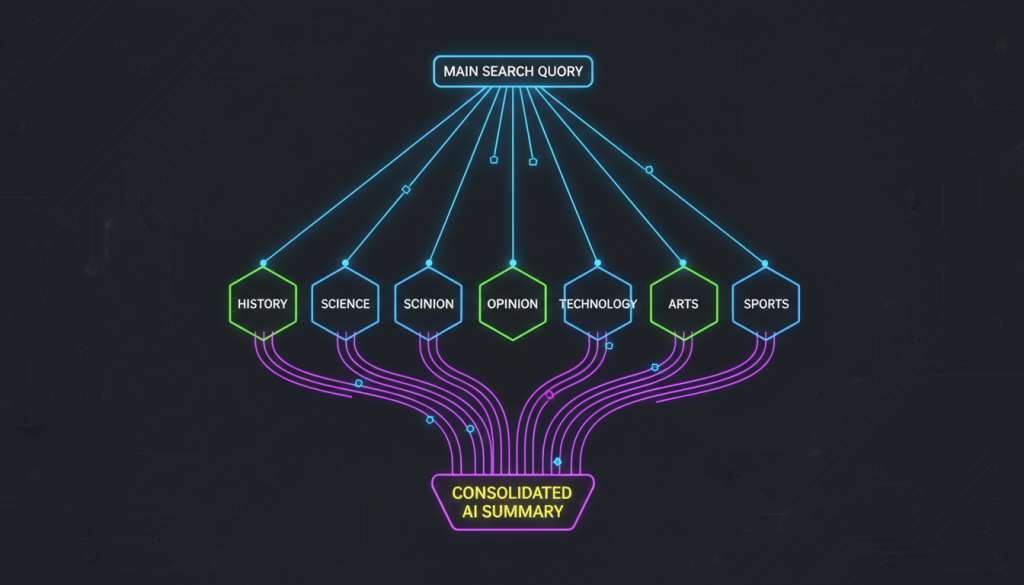
Fan-Out and the impact on rankings
The fan-out mechanism is central to how AI Overviews assemble information. By issuing multiple related queries, the system can identify authoritative content that addresses specific subtopics within a broader question. This has implications for publishers and site owners, as content that is well-structured, authoritative, and relevant to nuanced aspects of a query has a higher chance of being cited within an AI Overview.
Industry analysis indicates that AI Overviews can influence visibility in meaningful ways. Because the system draws from a diverse set of sources, sites that provide clear, expert-level information may benefit from increased citation odds. The fan-out technique also means that content ranking for long-tail variations of a query can surface in the snapshot, even if it wouldn’t appear in traditional top results. This creates opportunities for specialized content to gain exposure alongside mainstream sources.
Availability and language support
AI Overviews are available in many countries and languages worldwide. Google’s help documentation lists extensive availability across the Americas, Asia-Pacific, and other regions, including the United States, Canada, Brazil, India, Australia, Japan, and many more. The feature supports multiple languages, ensuring that users can access AI-generated summaries in their preferred language. This broad availability reflects Google’s commitment to making AI-assisted search accessible to a global audience.
As the feature evolves, Google continues to expand language and regional coverage. The gradual rollout allows the company to monitor quality and adjust the experience for different markets. For users, this means they may see AI Overviews appear more frequently over time, especially for queries where the system determines that a synthesized summary will be most useful.
Advertising within AI Overviews
As we enter 2026, Google expanded the presence of ads within and adjacent to AI Overviews to additional countries beyond the United States. This expansion includes English-language markets such as Australia, Canada, India, Indonesia, Kenya, Malaysia, New Zealand, Nigeria, Pakistan, Philippines, and Singapore. Ads can appear in the form of text and shopping units, sourced from existing Search, Shopping, and Performance Max campaigns. The placement is designed to be helpful and relevant, appearing when the system determines that commercial results align with the user’s query and the content of the AI Overview.
Google’s approach to ad placement in AI Overviews uses a hybrid matching method. Rather than relying solely on the user’s original search terms, the system considers both the initial query and the content of the AI-generated summary. This allows for more nuanced ad selection that reflects the broader context of the user’s exploration. Advertisers in eligible markets can leverage their existing campaign structures to participate, with the potential to reach users at a moment when they are actively evaluating options and seeking detailed information.
Ad eligibility and sensitive categories
Google restricts ads in AI Overviews for queries related to sensitive verticals. This includes adult content, alcohol, gambling, finance, healthcare, politics, and other categories that require heightened caution. These safeguards are intended to prevent the promotion of potentially harmful or misleading products and services within an AI-generated context. Advertisers in these verticals may still appear in traditional search results, but their ads will not be shown within AI Overviews for relevant queries.
For commercial queries outside these restricted categories, AI Overviews can create a valuable environment for advertisers. Users often engage with these summaries when researching products, comparing options, or seeking detailed guidance. By appearing alongside the AI snapshot, advertisers can connect with high-intent users in a context that emphasizes clarity and comprehensive information.
Campaign integration and matching logic
Because ads are drawn from existing campaign types, advertisers do not need to create new, specialized campaigns to appear in AI Overviews. Text and shopping ads from Search, Shopping, and Performance Max campaigns are eligible, and Google’s systems automatically evaluate whether they are a good fit based on the query and the overview content. This approach streamlines adoption for advertisers while maintaining relevance for users.
The matching logic represents a shift from purely keyword-based targeting. By incorporating the content of the AI Overview, the system can serve ads that align with the nuanced themes and subtopics surfaced in the summary. This can benefit advertisers whose products or services address specific aspects of a broader query, even if those aspects are not explicitly captured in the initial search terms.
Comparative overview: traditional search vs. AI Overviews
AI Overviews introduce a new layer to the search experience that differs from traditional results in several key ways. The table below highlights core differences across user experience, information synthesis, ranking dynamics, and advertising placement.
| Dimension | Traditional Search | AI Overviews |
|---|---|---|
| Information Presentation | List of blue links and snippets | AI-generated summary with source links |
| Query Handling | Single query per search | Fan-out technique issues multiple related queries |
| Ranking Impact | Based on relevance and authority for the query | Citation odds increase for authoritative, structured content |
| Ad Placement | Top and bottom of results page | Within or adjacent to AI snapshot, using query and summary context |
| User Intent | Navigational or informational click-through | Exploratory research with immediate synthesis |
Implications for publishers and site owners
AI Overviews can change how users discover and engage with content. Because the snapshot provides a direct answer, some users may satisfy their intent without clicking through to a website. However, the inclusion of source links offers a pathway for deeper engagement, particularly for users who want to verify details or explore specific subtopics. Publishers should focus on creating content that is authoritative, well-structured, and directly addresses the nuanced aspects of user questions.
There are practical steps that can improve the likelihood of being cited in an AI Overview. These include providing clear, factual content with proper headings, using concise summaries that capture key points, and ensuring that the page is technically sound. Content that demonstrates expertise and covers related subtopics comprehensively is more likely to be selected by the fan-out process. Additionally, maintaining a strong presence in traditional search results remains important, as AI Overviews are an augmentation rather than a replacement for web listings.

Best practices for content structuring
To align with how AI Overviews synthesize information, consider structuring content to answer both high-level and specific questions. Use descriptive headings that reflect user intent, and provide bullet points or numbered lists for clarity. Ensure that facts are presented accurately and are supported by credible sources where appropriate. Avoid overly promotional language; instead, focus on delivering value and clarity.
Technical optimization also matters. Fast-loading pages, mobile-friendly design, and accessible markup help ensure that content can be properly parsed and understood. Clear metadata and descriptive titles can further enhance the chances of being surfaced in relevant contexts. While there is no guaranteed way to be included in an AI Overview, these practices improve overall content quality and visibility.
Monitoring and adaptation
As AI Overviews evolve, publishers should monitor changes in traffic patterns and user behavior. Analyzing which queries trigger AI Overviews and how users interact with source links can provide insights into opportunities for refinement. If certain pages experience reduced click-through due to AI summaries, consider enhancing the depth of content or adding unique value that encourages users to click through for more detail.
Staying informed about updates to Google’s documentation and industry analysis is also valuable. Understanding how the fan-out mechanism works and how ads are integrated can help publishers and site owners adapt their strategies. A proactive approach—combining high-quality content, technical excellence, and ongoing analysis—will position sites to thrive in this new search environment.
Implications for advertisers
For advertisers, AI Overviews represent a new surface area to reach users who are actively researching and evaluating options. Because ads are matched using both the original query and the content of the AI summary, campaigns that are well-structured and aligned with nuanced user needs have a strong chance of appearing in relevant contexts. This can be particularly effective for shopping queries, product comparisons, and informational searches with commercial intent.
The expansion to additional countries means that advertisers in more markets can now access this placement. English-language markets across Asia-Pacific, Africa, and North America are included, enabling a broader range of businesses to participate. Advertisers should review their campaign settings to ensure they are eligible and consider how their creative and targeting align with the types of queries that trigger AI Overviews. Monitoring performance and adjusting bids or budgets may be necessary as the feature matures.
Strategic considerations for campaigns
Because AI Overviews can appear for complex, multi-faceted queries, advertisers should think beyond single-keyword strategies. Focus on thematic coverage that addresses the various subtopics users might explore. For example, if a user asks for guidance on choosing a product category, the AI Overview may summarize key criteria, and ads that speak to specific criteria or use cases may be more relevant.
It is also important to respect the restrictions around sensitive categories. Advertisers in finance, healthcare, or other regulated industries should ensure compliance with policies and avoid attempting to place ads in AI Overviews for restricted queries. Instead, concentrate on non-sensitive commercial intents where the feature is available and appropriate.
Global rollout and user experience
Google’s rollout strategy for AI Overviews emphasizes gradual expansion and careful monitoring. The feature is now available in a wide array of countries and languages, reflecting a commitment to global accessibility. Users in these markets see AI Overviews when the system determines that a generative summary will be helpful, which can vary by query type and language. The experience is designed to be intuitive: a clear snapshot, followed by links for deeper exploration.
For users, the presence of AI Overviews can reduce the time spent synthesizing information from multiple sources. For complex questions, the snapshot provides a starting point that can be validated through the linked sources. This balance of immediacy and transparency aims to enhance trust while delivering a more efficient search experience. As the feature continues to mature, users can expect improvements in accuracy, coverage, and relevance.
Conclusion
AI Overviews represent a significant evolution in how search results are presented, combining generative AI with traditional web results to deliver faster, more comprehensive answers. For users, this means clearer summaries and easier access to deeper information. For publishers, it underscores the importance of authoritative, well-structured content that addresses nuanced questions. For advertisers, it opens a new placement that leverages both query context and AI summary content to reach high-intent audiences.
As Google expands AI Overviews to more countries and refines the underlying technology, the key to success is adaptability. Focus on creating valuable content, maintaining technical excellence, and aligning campaigns with user intent. Embrace the new opportunities presented by fan-out discovery and AI-assisted research, while continuing to serve the needs of users with clarity and expertise. The future of search is evolving, and those who prioritize quality and relevance will be best positioned to thrive.

Loïc Vansnick is the leader of the Zumim project, whose expertise is based on a rare combination of two fundamental areas: he is a certified civil engineer and management engineer


